

Movie Theaters Are Just Airlines With Popcorn
Modern MBA on YouTube
A video on YouTube. In Business & Money, a Krater category.
Watch on YouTubeSummary by Krater
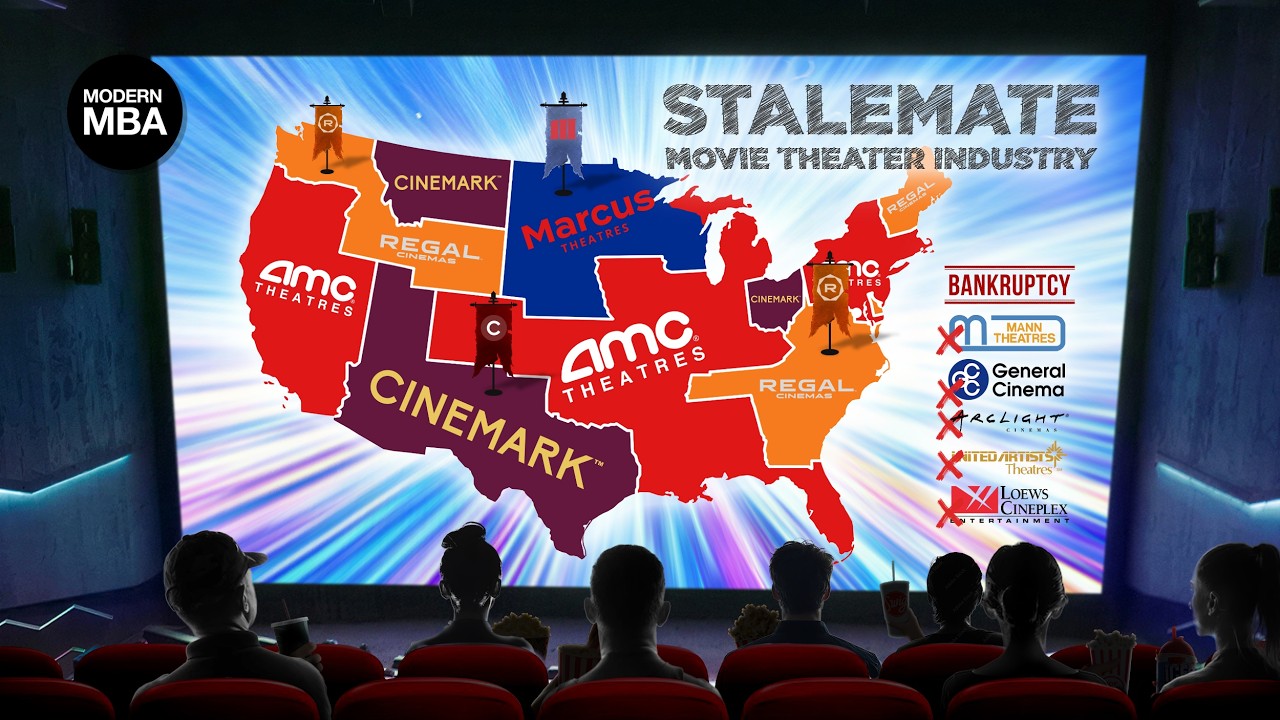
This video examines the economics of the movie theater industry, comparing the business models, overhead costs, box office revenue splits, and concession strategies of major chains like AMC, Regal, Cinemark, and Marcus, and concludes that theaters operate on volatile, low-margin business structures reliant on debt, scale, and concession sales.
From the video
Answers: Why are movie theaters struggling economically despite high ticket prices?
- movie theater economics
- box office revenue splits
- concession sales and pricing
- theater chain consolidation
- real estate and overhead costs
What it concludes
- Movie theaters operate on a lopsided revenue sharing model that favors Hollywood studios, which typically keep 50% to 60% of box office ticket revenue.
- The movie theater industry suffers from oversupply and fixed marginal costs, where the cost of serving an empty seat can never be recovered.
- Major theater chains like AMC survived decades of expansion and consolidation by going public and taking on massive debt to fund capital expenditures.
- Concessions like popcorn, candy, and soda are the only areas where movie theaters retain complete control and achieve economies of scale, functioning more like snack retailers than film producers.
- Cinemark outperforms its US rivals by expanding into high-growth, lower-cost international markets like Latin America, where it commands significant market share.
- Marcus Corporation benefits from a unique cost structure by owning much of its underlying real estate, resulting in lower overhead and steady operating margins compared to its peers.
Seen it? Rate it, review it and add it to your lists.
Title, thumbnail and channel name from YouTube. Krater isn't affiliated with, endorsed by or sponsored by YouTube or Google.